
We hope you enjoy reading this post. If you are looking for packaging solutions, feel free to contact us.
When you produce paper boxes for products — whether mailer boxes, retail cartons, gift boxes or food packaging — the printing method greatly affects:
Print quality: sharpness of images, color accuracy, detail level
Cost-efficiency: per-box cost vs order quantity, setup cost, waste
Flexibility: ability to customize per batch or even per box (e.g. seasonal designs), especially for smaller orders
Finish & brand perception: luxury vs economical look; possibility for special effects (foil, embossing, varnish, matte/gloss)
Choosing the right box printing approach + finishing helps you balance budget, aesthetics, and practicality.
Core Box Printing Methods
Here are the main printing techniques used in packaging / paper box production:
Uses metal plates (e.g. aluminum), transferring ink via a rubber blanket to the paperboard surface.
Works with both CMYK and Pantone colors
Known for high-quality, sharp, consistent image output, precise color reproduction, excellent compatibility with various paper finishes (matte, gloss, coated paperboard) and ability to handle complex graphics / gradients.
Best suited for medium to large print runs (e.g. 1,000+ units) — per-unit cost becomes economical once setup costs (plates, calibration) are amortized.
Less ideal for very small or highly variable batches because of high setup cost and relatively long setup time.
Use cases: high-end retail packaging, brand-critical boxes, consistent repeat orders, cartons requiring high color fidelity.
Uses flexible relief plates and fast-drying inks; ink is transferred from an “anilox” roller to plate to substrate.
Very efficient for high-volume, large-scale production, especially when simplicity of design (solid colors, bold graphics) is acceptable.
Per-unit costs tend to be low once set up; ideal when printing thousands or tens of thousands of boxes.
Compared with offset, flexo quality is somewhat lower — finer details, gradients or photographic images may not reproduce as sharply; color matching is less precise.
Use cases: corrugated shipping boxes, bulk folding cartons, packaging where durability and cost-efficiency matter more than ultra-high graphic details.
Prints directly from digital files to packaging material (no plates needed), like a large industrial printer.
Excellent for small runs, prototypes, custom or seasonal designs, variable data printing (different names / barcodes / batch codes / short campaigns) — minimal setup, quick turnaround.
Because of low setup overhead, digital printing is usually cost-effective for small quantities but becomes more expensive per unit for large runs compared with offset or flexo.
Downside: print quality can be slightly lower than offset (especially for very fine detail, rich gradients or solid blacks), and specialty finishes / coatings may have limited support.
Use cases: small-batch bespoke boxes, start-ups or artisan brands, test packaging designs, limited editions, e-commerce sellers who want flexibility.
| Method | Print Quality & Detail | Setup Cost & Speed | Cost-efficiency per Unit | Best For / Use Cases |
|---|---|---|---|---|
| Offset |  — sharp, accurate, supports gradients & complex graphics — sharp, accurate, supports gradients & complex graphics |
High setup cost; moderate speed | Low per unit for mid-to-large runs | Premium retail boxes, consistent repeat orders, brand packaging |
| Flexo | — good for bold colors, less for fine detail |
Moderate setup cost; high speed for large volume | Very cost-efficient for large volume | Bulk cartons, corrugated boxes, simple graphics packaging |
| Digital | — good for simple/mid designs, less for complex graphics |
Very low setup cost; fastest turnaround | Cost-effective for low / variable quantity | Small runs, test batches, customized / personalized packaging |
Notes: Beyond printing, adding finishing techniques (e.g. coating, foil stamping, embossing) will influence cost and final perception — see next section.
After basic printing, many boxes are further processed with special finishing to enhance their visual appeal, durability, or tactile quality. Common finishing techniques include:
Varnishing / UV Coating — applying a glossy, matte, or silk coating to protect print and give surface sheen or smooth texture.
Spot UV / Spot Gloss — applying UV coating only on selected areas (like logo or image) to create contrast and highlight.
Foil Stamping (Hot Foil) — transferring metallic foil (gold, silver, etc.) onto box surface for premium, luxurious appearance.
Embossing / Debossing — creating raised (or recessed) textures or patterns, giving 3D tactile feel, enhancing brand or logo prominence.
Soft-touch coating / Lamination / Protective films — providing tactile softness, fingerprint resistance, durability, or moisture resistance depending on material.
These finishing techniques significantly impact:
Perceived box quality — making it look premium, luxurious, or specialty
Durability & protection — important for food packaging, mailer boxes, gift boxes
Cost per box — each finishing adds extra cost, and complexity in production

When deciding which printing and finishing route to adopt for your paper boxes, consider:
Order volume / batch size — Small orders → digital; Medium-large fixed orders → offset; Massive volume with simpler design → flexo.
Design complexity & visual requirements — If you have detailed graphics, gradients, complex brand colors → offset (or high-end finishing). For simple graphics or bold colors → flexo or digital.
Budget for setup vs per-unit cost — High initial setup cost (offset/flexo) pays off only with large volumes; digital minimizes upfront cost.
Need for customization or variability — Digital printing excels when you need frequent changes, personalized boxes, or seasonal packaging.
Brand positioning / target market expectations — Premium products benefit from offset + finishing (foil, embossing, UV, etc.) for high-end feel; budget or bulk products may prioritize cost-efficiency over finishing.
Material / paperboard / substrate type — Some substrates may not suit certain printing or finishing processes; consult with packaging printer to verify compatibility.
Regulatory, food-safety or functional requirements — For food packaging boxes, consider coatings/lamination for grease or moisture resistance, and choose inks/coatings safe for direct or indirect food contact.

There’s no one-size-fits-all printing solution for paper boxes. The “best” method depends on what you value — be it print quality, flexibility, cost, volume, or brand positioning.
Understanding the differences in box printing methods and finishing options allows you to create packaging that not only protects your products but also enhances your brand image. Whether you need economical mailer boxes or premium gift boxes, selecting the proper box printing technique ensures beautiful results and optimized production costs.
If you need custom box printing for packaging, feel free to ask—I can help you create a professional design template and quotation details
Guanchi Packaging Co.,Ltd is a leading and professional manufacturer for customized packaging with high quality ECO-friendly material. We can be your trustworthy and reliable business partner.
Before purchasing our custom bags, maybe you will have some questions. So, we have listed some of the most common questions below. You can browse our FAQ section and if you have other questions, please feel free contact us.
1.Are you a manufacturer?
Yes we are. We’re a manufacturer and we use eco-friendly materials for custom packagings all the time.
2.Can I get some samples before placing a bulk order?
Yes you can. We can finish the samples in 3-5 days after you confirm the design and details.
3.What is the minimum quantity?
In our company, we specialize in crafting custom packagings based on your specifications. This implies that we don’t enforce a universal minimum order quantity for all our products. The minimum order quantity is contingent upon the specific type of custom packagings you require and whether you prefer an unadorned version or one featuring a printed design.
4.Can your custom packagings be recyclable?
Yes,they can. We use eco-friendly materials such as recyclable paper, vegetable-based inks, and water-based coatings.
5.Can you make a 3D drawing based on my artwork?
Certainly, we have the capability to assist you with 3D drawing according your artwork. It’s advisable to entrust this aspect to individuals with a stronger creative inclination. Our primary emphasis revolves around transforming your concepts into exceptionally crafted custom packagings.
6.Do you have a FSC certification?
Yes we do.You can check our FSC certification on ABOUT US page.
7.What type of printing colors can be chosen?
Our standard print is CMYK, also we support Pantone print, if you need, please provide your Pantone color to us.
8.What printing techniques do you use for the packagings?
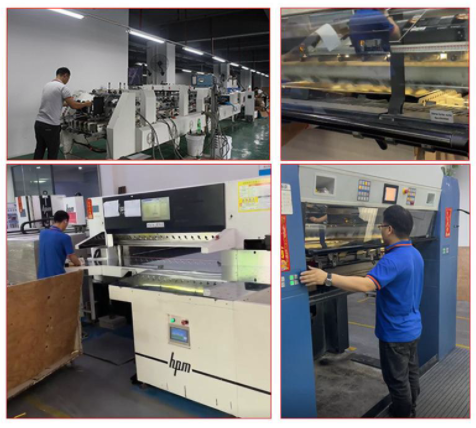
We have all kinds of advanced production equipment for offset printing, UV printing, water printing, flexo printing, pad printing and digital quick printing. We’ve recognized by lots of foreign famous brands.
Guanchi Packaging Co.,Ltd is a leading and professional manufacturer for customized packaging with high quality ECO-friendly material. We can be your trustworthy and reliable business partner.